
Photographer Inquiry Mistake: Missing the First Hour
The first hour after a lead contacts you matters most. Learn the common inquiry response mistake photographers make and how to fix it fast.
Introduction
A common mistake photographers make is assuming a good inquiry can wait a few hours.
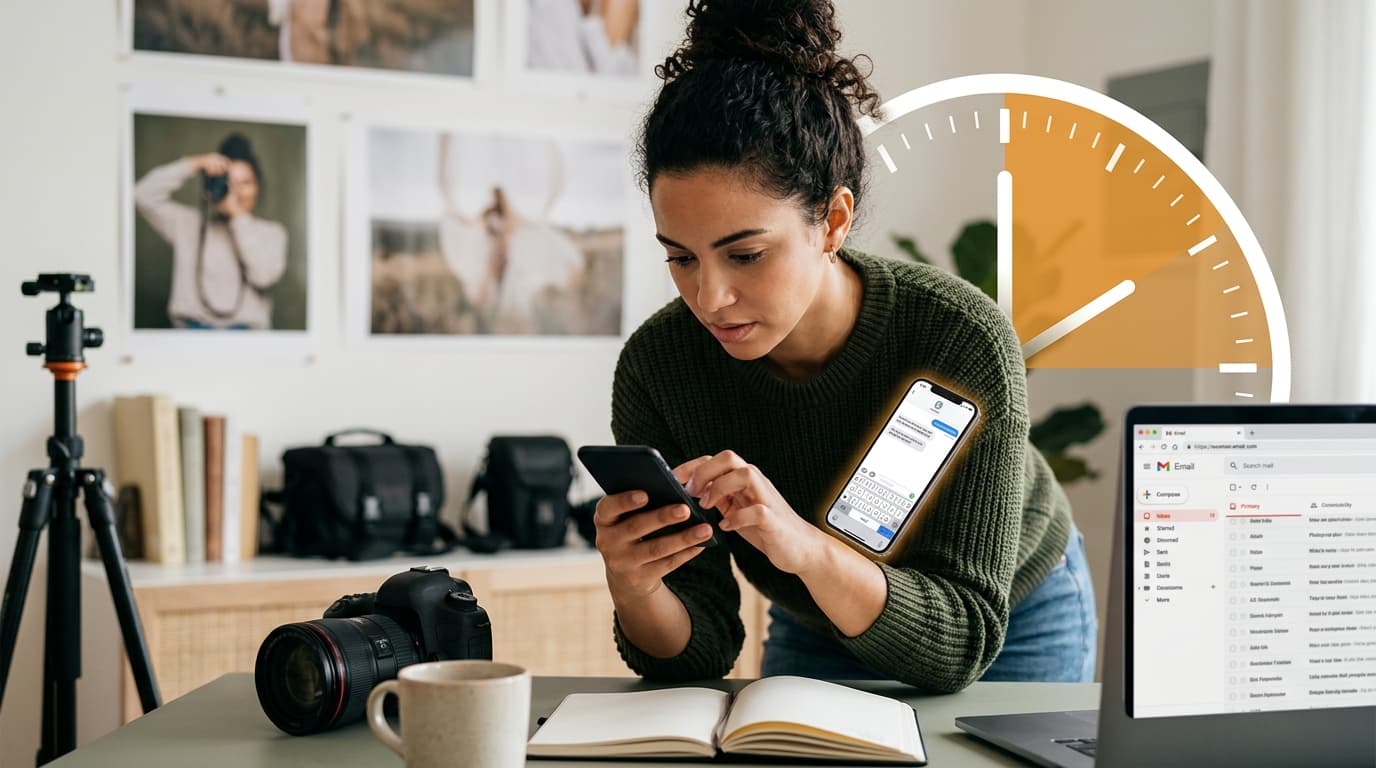
It feels harmless. You are in a shoot, driving home, editing, or trying to protect your evening. You tell yourself you will reply later when you have time to write something thoughtful. But in that delay, a warm lead turns cold, or worse, books someone else.
The first hour matters more than most photographers realize. Not because every client expects a full proposal in 10 minutes, but because quick acknowledgment builds trust, keeps momentum, and stops leads from drifting into the black hole of “I’ll get back to this tomorrow.”
In this post, I’ll break down why slow first responses cost bookings, what photographers get wrong about inquiry handling, and how to fix it with a simple system that works even when you are busy.
The Common Mistake Treating Every Inquiry Like It Can Wait
Most photographers do not ignore leads on purpose.
The real problem is that inquiries arrive at the worst times. During a wedding. In the middle of family dinner. While you are culling a gallery at 11pm. So the default becomes: reply when I have a free block of time.
That sounds reasonable, but it creates three expensive problems.
First, the lead keeps shopping.
A person who inquires with you rarely stops there. They are usually contacting multiple photographers within the same day, especially for weddings, engagements, portraits, and events. If someone else replies quickly, clearly, and professionally, they gain momentum before you even open the message.
Second, your inbox becomes heavier every hour.
One unanswered inquiry turns into five. Then each one needs context-switching. You have to remember what they asked, check your calendar, draft a custom response, and maybe hunt across Instagram DMs, email, and WhatsApp to piece together the thread. Delay makes simple work feel complicated.
Third, slow replies quietly damage perceived professionalism.
Clients do not just judge your photos. They judge what it feels like to work with you. If the first experience is uncertainty, they start wondering what communication will be like after they book.
Why this matters for photographers running a booking business:
Your inquiry process is part of your product. Fast, clear communication signals reliability. And reliability is what gets high-intent leads to keep moving toward a call, quote, or contract.
Why the First Hour Changes Your Booking Rate
The first hour is not magic because clients are impatient. It matters because that is when intent is highest.
When someone reaches out, they are actively thinking about their event, date, budget, and options. Their attention is on the decision. If you respond during that window, you meet them while motivation is high.
If you wait six hours, 12 hours, or a day, the context has already cooled down.
Here is what a quick first response does:
It confirms you are available and engaged
Even if you cannot answer every question immediately, a fast acknowledgment tells the client: I saw this, I care, and you are not chasing me.
That alone reduces drop-off.
It reduces comparison shopping friction
When a lead is still waiting on half the photographers they contacted, the one who replied first often becomes the easiest option to continue with. Not always the cheapest. Not always the most talented. Just the easiest to trust and move forward with.
That is a real edge.
It buys you time without losing momentum
A quick first-hour response does not need to be a full pricing guide, availability check, and personalized sales sequence. It just needs to keep the conversation alive.
For example:
Hi Sarah, thanks so much for reaching out about your October wedding. I’m in the middle of a shoot right now, but I’ve received your message and I’ll send over availability and next steps later today. If you want, you can also share your venue and estimated guest count so I can point you to the best-fit package.
This works because it does four things fast:
- acknowledges the inquiry
- sets an expectation
- gives a timeline
- invites the next piece of information
Why this matters for photographers running a booking business:
Speed protects lead intent. You do not need to be glued to your phone. You need a process that catches demand while it is still warm.
What to Send in the First Hour Without Living in Your Phone
This is where many photographers overcomplicate things.
They think a fast response has to be custom, polished, and complete. It does not.
A strong first-hour reply should do one job: move the conversation to the next step.
Here is the simplest structure:
1. Acknowledge the inquiry
Thank them and reference what they are asking about.
Example:
Hi Jenna, thanks for reaching out about newborn photos.
That feels human and specific, even though it is short.
2. Set expectations
Tell them what happens next and when.
Example:
I’ve got your message and I’ll send over session details and availability this afternoon.
This removes uncertainty.
3. Ask one useful qualifying question
Do not ask five questions. Ask one that helps you route the lead properly.
Examples:
- What date are you looking for?
- Which package are you most interested in?
- What’s the venue?
- How many people will be attending?
- What city are you planning the session in?
4. Keep it short
The best first response is usually 3 to 5 sentences.
Here are three practical templates photographers can use.
For wedding inquiries
Hi Alex, thanks for reaching out about your wedding. I’ve received your message and I’ll check my availability for your date today. If you want, send over your venue and I’ll also point you to the package that usually fits best.
For portrait inquiries
Hi Melissa, thanks for your inquiry. I’m currently in sessions today, but I’ll send over availability and pricing later this afternoon. In the meantime, let me know which type of session you’re planning and your ideal timeframe.
For Instagram DMs
Thanks so much for reaching out. I saw your message and I’ll send you details shortly. If you already have a date in mind, send it here so I can check availability first.
Why this matters for photographers running a booking business:
You do not win leads by writing novels. You win by responding quickly, sounding organized, and making the next step easy.
How to Build a First Hour Response System
If your response speed depends on memory, mood, or free time, it will break.
What works is a lightweight system.
Create responses by inquiry type
Start with your top three inquiry categories:
- weddings
- portraits
- family or newborn sessions
Write one first-hour reply for each. Not a full canned email. Just a quick acknowledgment plus one qualifying question.
Store them somewhere easy to access:
- notes app
- email templates
- CRM snippets
- saved replies on Instagram
- WhatsApp quick replies
The goal is simple: remove the blank page problem.
Define your first response standard
Set a rule: every inquiry gets a response within 60 minutes, even if it is only a short acknowledgment.
That standard changes how you work. It forces you to separate:
- immediate acknowledgment
- full sales response
- deeper follow-up
Those are different tasks. Most photographers blend them together, which is why replies get delayed.
Centralize your inboxes
One of the biggest hidden causes of slow response time is scattered communication.
A lead starts on Instagram, follows up by email, and sends one more question on WhatsApp. Now you are checking multiple apps, trying to remember if you already replied. This creates delays even when you are trying to be responsive.
At minimum, create one routine:
- check all inquiry channels at set intervals
- log each lead in one place
- mark what needs a real follow-up
Even a basic spreadsheet is better than relying on memory.
Use a pipeline, not an inbox
Inboxes are bad at showing status.
A pipeline is better because it tells you where each inquiry stands:
- new inquiry
- acknowledged
- waiting on client
- quote sent
- booked
- closed
This is the difference between “I think I replied” and “I know exactly where this lead stands.”
Protect your evenings with automation
A lot of photographers delay replies because they do not want to become available 24/7. That concern is valid.
The fix is not slower response. The fix is smarter response.
For example, if someone inquires at 9:42pm, they do not need your full attention right then. They need a clean, professional first touch that keeps the lead warm until morning.
That is exactly the kind of repetitive communication automation handles well.
Why this matters for photographers running a booking business:
Consistency beats effort. A simple system lets you respond fast without letting inquiries take over your life.
The Follow Up Mistake That Cancels Out a Fast Reply
A quick first response helps, but it is not enough if your follow-up process is weak.
This is the second mistake photographers make: they reply once, then disappear.
It usually happens like this:
- lead inquires
- photographer sends a quick acknowledgment
- photographer means to send pricing later
- another shoot, edit, or weekend happens
- lead goes cold
A fast first response only works when it leads into a reliable next step.
Set a clear deadline for your full reply
If your first message says “I’ll send details this afternoon,” do it.
If you say “tomorrow morning,” send it tomorrow morning.
Clients notice this. Fast acknowledgment followed by missed follow-through creates the opposite of trust.
Keep your second message simple too
Do not overbuild your pricing response. The goal is not to answer every possible question. The goal is to help the right client take the next step.
A strong second reply might include:
- confirmation of availability
- package starting price
- link to portfolio
- one clear call to action
Example:
Hi Sarah, I’m available for October 12. Wedding collections start at $3,200, and I’ve linked my pricing guide here. Based on your venue and guest count, Collection Two is usually the best fit. If you’d like, we can book a quick call this week to talk through the timeline and coverage.
That is enough.
Add one follow-up if they go quiet
If a lead does not respond, follow up once or twice with context.
Example:
Hi Sarah, just checking in in case my last message got buried. I’m still holding your date for now, so if you want me to send over next steps or answer any questions, I’m happy to help.
This works better than “just following up” because it reminds them what is at stake.
Why this matters for photographers running a booking business:
Bookings are usually lost in the gap between inquiry and follow-up. Fast response gets attention. Structured follow-up converts it.
Conclusion
The common mistake is not being rude, careless, or bad at sales. It is simpler than that: too many photographers wait too long to respond to new inquiries.
The fix is also simpler than most people think. You do not need to write perfect replies from scratch. You need a first-hour system: fast acknowledgment, one useful question, clear next steps, and a pipeline that shows what still needs your attention.
That matters because inquiry speed is not just admin. It directly affects booking rate, client trust, and how chaotic your week feels.
If you want a practical way to keep every inquiry warm without living in your inbox, see how Kaza handles this automatically at heykaza.com.
Frequently Asked Questions
- Do photographers really need to respond within the first hour?
- Yes, if possible. The first hour is when lead intent is highest. Even a short acknowledgment can keep the conversation alive and improve your chances of booking.
- What if I am in a shoot and cannot send a full reply?
- Send a short acknowledgment or use an automated first response. You do not need a full quote immediately. You just need to confirm you received the inquiry and set expectations for when you will follow up.
- Should my first response include pricing?
- Not always. If pricing is simple and standardized, you can include a starting point. But in many cases, the better move is to acknowledge the inquiry, ask one qualifying question, and send tailored details in your next message.
- What is the best way to manage inquiries from Instagram, WhatsApp, and email?
- Use one central system or pipeline to track new inquiries, response status, and follow-up. The more scattered your inboxes are, the easier it is for leads to get missed or delayed.